Reviews are independent. Prices are indicative (SGD) and change often — always check the latest price before buying. We may earn a commission from some links.
Making your aircon smart is one of the highest-value upgrades in a Singapore home, where the aircon runs almost year-round and controls comfort, sleep and electricity bills alike. A smart home aircon setup lets you switch the unit on from the bus so the bedroom is cool by the time you arrive, set schedules, control it by voice, and even trigger it automatically based on temperature or humidity. The good news is you rarely need to replace your aircon: a smart IR controller can make almost any existing remote-controlled unit smart, and this guide covers both those add-ons and natively smart aircon options in Singapore. For the price of a nice dinner, a smart controller can turn the aircon you already own into something you schedule, automate and control by voice, which is why it is such an easy upgrade to recommend.
We wrote this for homeowners who want app and voice control over their existing aircon, as well as those choosing a new unit and wondering how smart it can be. We weighed compatibility with common local aircon brands, humidity and temperature sensing, scheduling, running-cost features and voice assistant support. Whether you want a cheap IR blaster or a dedicated smart aircon controller with climate reactions, there is a solution below that fits HDB flats and condos. Remember that IR-based controllers need clear line-of-sight to the unit and generally one controller per aircon, so a multi-room flat will want a blaster in each bedroom and the living room. Done well, a smart aircon setup means walking into an already-cool bedroom after work, sleep schedules that ease off overnight, and less wasted cooling on the electricity bill.
What to look for in Singapore
- Compatibility with your existing aircon remote, since most smart controllers work by learning your unit’s IR signals.
- Temperature and humidity sensing, which lets the system react to Singapore’s climate rather than just follow timers.
- Scheduling and geofencing so the aircon switches on as you head home or off when everyone leaves.
- Voice assistant support for Google Home or Alexa to adjust temperature hands-free.
- Running-cost features like usage tracking, comfort modes and auto-off to keep bills in check.
- Whether you want an add-on IR controller or a natively smart aircon with its own app.
- Placement and line-of-sight for IR blasters, which need to ‘see’ the aircon unit to work.
- Local availability, warranty and support for the controller or aircon brand in Singapore.
At a glance
| Model | Best for | Key spec | Indicative price | Rating |
|---|---|---|---|---|
| Sensibo Air / Sky — dedicated smart AC controller | Best climate-aware control | IR control, temp + humidity sensing | $130–$300 | ★★★★★ |
| Aqara Hub with IR — ecosystem value | Aircon + wider smart home | IR blaster, hub automations | $60–$150 | ★★★★☆ |
| Tapo / Xiaomi IR controller — budget pick | Cheapest smart aircon | IR blaster, app + voice | $25–$60 | ★★★★☆ |
| Daikin Smart Control (native) — new aircon | Buying a new unit | Built-in Wi-Fi app control | Aircon-dependent | ★★★★☆ |
The picks
Editor’s Choice
Sensibo Air / Sky
Sensibo is a purpose-built smart aircon controller and the best all-round choice for Singapore homes. It learns almost any aircon remote, adds temperature and humidity sensing, and can automatically adjust or switch off to keep you comfortable and cut waste. Geofencing, schedules and voice control round out a genuinely smart setup.
Pros
- Climate-aware auto adjustments
- Works with most existing aircon
- Geofencing, schedules and voice control
Cons
- Pricier than a basic IR blaster
- One unit needed per aircon
Best Value ecosystem
Aqara Hub with IR
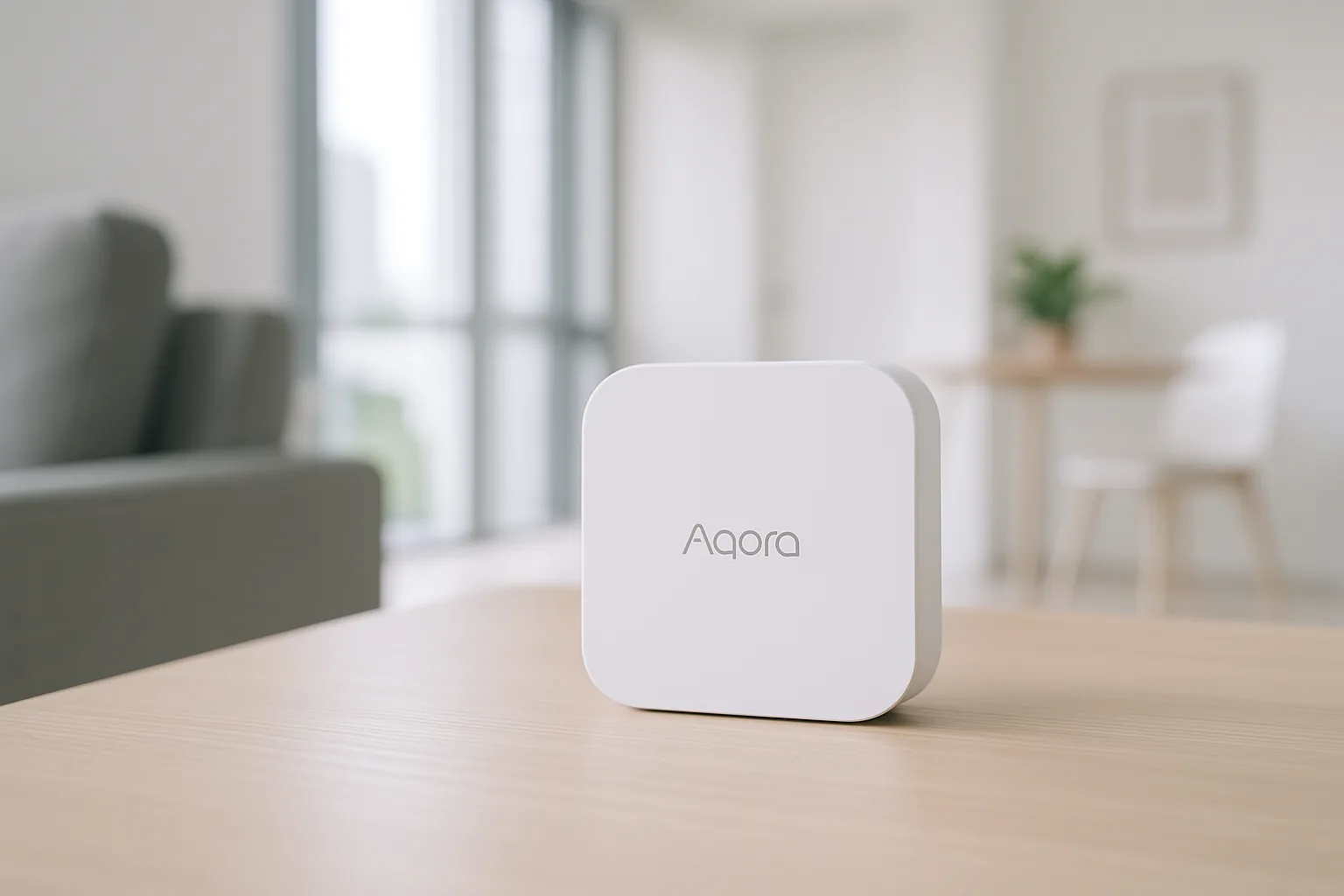
If you are building a wider smart home, an Aqara hub with a built-in IR blaster controls your aircon and doubles as a bridge for sensors, lights and locks. It lets you trigger the aircon from motion or temperature sensors, offering clever automations at strong value.
Pros
- Controls aircon plus wider smart home
- Sensor-driven automations
- Great value multi-purpose hub
Cons
- Less aircon-specific than Sensibo
- Best within the Aqara ecosystem
Best budget
Tapo / Xiaomi IR Controller
For the cheapest route to app and voice control, a TP-Link Tapo or Xiaomi IR blaster learns your aircon remote and adds scheduling for very little outlay. It lacks smart climate reactions, but for basic remote and voice control it is unbeatable value.
Pros
- Very affordable entry point
- App and voice aircon control
- Easy to set up
Cons
- No built-in climate automation
- Needs clear line-of-sight to the aircon
Best for new aircon
Daikin Smart Control (Native)
If you are buying a new aircon, choosing a model with built-in Wi-Fi like Daikin’s smart-control range gives you native app control without any add-on. It integrates cleanly and often ties into Google or Alexa, ideal for a fresh installation.
Pros
- Native app control, no add-on
- Clean integration with the unit
- Voice assistant support on many models
Cons
- Only worth it when buying new
- Features vary by aircon model
The verdict
For most Singapore homes Sensibo is the best way to make your aircon smart thanks to genuine climate-aware automation, while an Aqara hub offers great value for wider smart homes and budget IR blasters cover basic app and voice control.
Frequently asked questions
Can I make my existing aircon smart without replacing it?
Yes. A smart IR controller like Sensibo, an Aqara hub with IR, or a budget Tapo or Xiaomi blaster learns your aircon’s remote signals, adding app and voice control to almost any existing remote-controlled unit.
What is the best smart aircon controller in Singapore?
Sensibo is the standout for its climate-aware automation, temperature and humidity sensing and geofencing. Aqara is best value if you want a wider smart home, while Tapo and Xiaomi blasters are the cheapest for basic control.
Will a smart aircon controller lower my electricity bill?
It can help. Features like schedules, geofencing, auto-off and comfort modes reduce needless cooling, and usage tracking makes waste visible. Savings depend on your habits and how you use the automations.
Do smart aircon controllers work with Google Home or Alexa?
Yes. Sensibo, Aqara and most IR controllers support Google Home and Alexa, so you can adjust temperature or switch the aircon on and off by voice.
Do I need one controller per aircon?
Generally yes for IR-based controllers, as each blaster needs line-of-sight to one unit. A multi-room flat with several aircon units will need a controller in each room. A few premium controllers can manage two nearby units, but for most homes budgeting one blaster per room is the safe assumption when planning your setup.
Related guides
Planning a smarter home?
Tell us your space and budget — we’ll point you to the right devices, or connect you with a supplier.