Reviews are independent. Prices are indicative (SGD) and change often — always check the latest price before buying. We may earn a commission from some links.
A closet dehumidifier is one of the cheapest, most effective ways to protect clothes, bags, leather and electronics from Singapore’s relentless humidity, keeping wardrobes, shoe cabinets and storerooms free of mould and that musty damp smell. Because enclosed spaces trap moisture, a compact wardrobe dehumidifier — whether a small electric Peltier unit, a rechargeable moisture absorber, or renewable desiccant crystals — often does more for your belongings than a big room unit ever could. This guide covers the best closet dehumidifier options available in Singapore and how to match one to your cupboard.
We wrote this for homeowners fighting mould in wardrobes, storerooms and shoe cabinets who want a targeted, low-cost fix. Many Singapore flats have at least one cupboard that stays stubbornly damp, and it is usually the one holding leather bags, cameras, watches or seldom-worn clothes that are most vulnerable to mould. A closet solution is often smarter than turning up a room dehumidifier, because you are treating the small trapped pocket of air where moisture actually collects rather than trying to dry the whole home. We judged each pick on moisture capacity, whether it needs power or draining, quietness, safety in enclosed spaces and SGD value from local sellers. Prices change often during sales, so treat all figures as indicative ranges and check the latest price before buying.
What to look for in Singapore
- Type — a mini electric (Peltier) dehumidifier for continuous drying with a power point, a rechargeable absorber for cordless cupboards, or desiccant crystals/boxes for the cheapest passive option.
- Moisture capacity matched to the cupboard size — a small wardrobe needs far less than a walk-in.
- Whether it needs a power outlet nearby, or works cordlessly, since most closets have no socket.
- Rechargeable or renewable design so you are not constantly buying replacements.
- A colour indicator that shows when the unit is saturated and needs recharging or emptying.
- Silent operation, since it sits inside a bedroom wardrobe.
- Safety and no-spill design, so there is no liquid leaking onto clothes or shoes.
- For larger storerooms, consider a compact plug-in dehumidifier rather than a passive absorber.
At a glance
| Type | Best for | Key spec | Indicative price | Rating |
|---|---|---|---|---|
| Mini electric (Peltier) dehumidifier — Editor’s Choice | Wardrobes near a socket | Continuous drying, small tank | $40–$120 | ★★★★☆ |
| Rechargeable moisture absorber — Best cordless | Cupboards with no power | Reusable, colour indicator | $25–$60 | ★★★★☆ |
| Desiccant crystals / box — Best Value | Shoe & small cabinets | Passive, renewable or disposable | $5–$25 | ★★★★☆ |
| Compact plug-in dehumidifier (Novita/Deerma) — Storerooms | Larger enclosed spaces | Higher capacity, plug-in | $80–$250 | ★★★★☆ |
The picks
Editor’s Choice
Mini electric (Peltier) closet dehumidifier
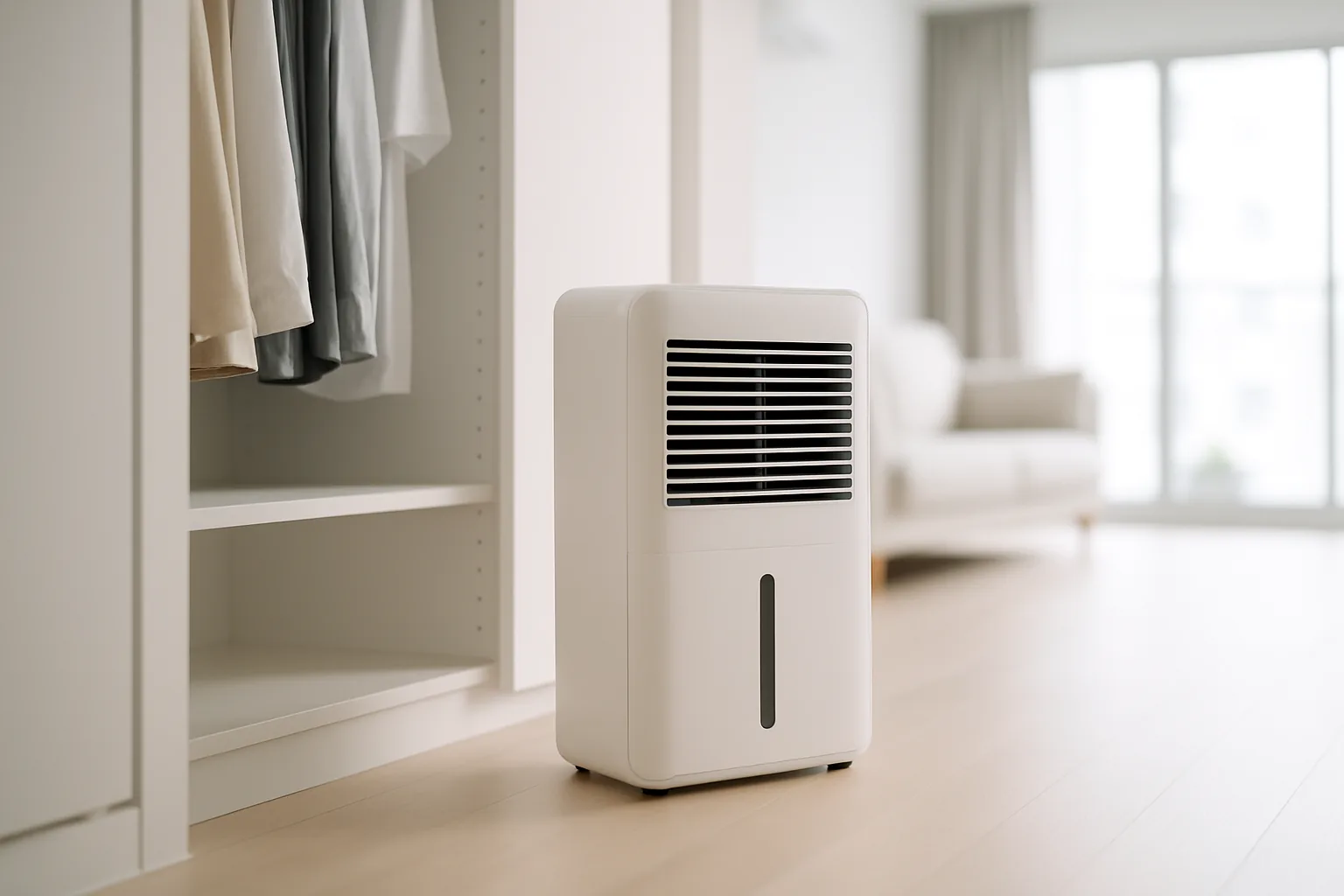
A small Peltier dehumidifier is the best pick for wardrobes and storerooms within reach of a power point, quietly pulling moisture out continuously and collecting it in a small tank you empty occasionally. It keeps clothes and leather goods dry without chemicals. Best for enclosed spaces where you can run a cable to a socket.
Pros
- Continuous, hands-off drying
- Quiet enough for bedroom wardrobes
- No consumables to replace
Cons
- Needs a nearby power outlet
- Small capacity, empty tank regularly
Best cordless
Rechargeable moisture absorber
Rechargeable absorbers use desiccant beads that draw moisture with no power or cables, then renew when you plug them in to dry out — ideal for wardrobes and cabinets with no socket. A colour window shows when to recharge. Best for cordless cupboards where you want a reusable, mess-free solution.
Pros
- No cables or draining
- Reusable and renewable
- Colour saturation indicator
Cons
- Needs periodic recharging
- Lower capacity than electric units
Best Value
Desiccant crystals / moisture-absorber box
Passive desiccant boxes and hanging crystal packs are the cheapest way to keep shoe cabinets, small drawers and cupboards dry, absorbing moisture with no power at all. Some are renewable in the sun or microwave; others are disposable. Best as an inexpensive, scatter-everywhere defence against mould.
Pros
- Very cheap
- No power needed
- Great for shoe and small cabinets
Cons
- Needs replacing or renewing
- Limited capacity per unit
Best for storerooms
Compact plug-in dehumidifier (Novita / Deerma)
For a larger walk-in wardrobe or storeroom, a compact plug-in dehumidifier from brands like Novita or Deerma offers far more extraction than a passive absorber, keeping bigger enclosed spaces reliably dry. Best when a small absorber simply cannot keep up with a bigger cupboard.
Pros
- Much higher capacity
- Suits walk-ins and storerooms
- Reliable continuous drying
Cons
- Needs power and more space
- Higher cost than absorbers
The verdict
For Singapore wardrobes a mini electric dehumidifier is the best pick where there is a socket, with rechargeable absorbers and cheap desiccant boxes as excellent cordless options for cupboards and shoe cabinets.
Frequently asked questions
Do I really need a dehumidifier in my wardrobe in Singapore?
If you have had mould on clothes, bags or leather, yes. Enclosed cupboards trap humidity and encourage mould and musty smells, and a small closet dehumidifier or absorber is a cheap, effective way to protect your belongings.
What is the best type of closet dehumidifier?
It depends on the cupboard. A mini electric unit is best where there is a socket, a rechargeable absorber suits cordless wardrobes, and cheap desiccant boxes work well in shoe cabinets and drawers. Larger storerooms benefit from a compact plug-in dehumidifier.
Do closet dehumidifiers need power or draining?
Passive absorbers and desiccant boxes need neither — you just renew or replace them. Rechargeable units need occasional recharging, while mini electric dehumidifiers need a power point and periodic tank emptying.
How do I stop mould on clothes in a humid cupboard?
Combine a closet dehumidifier or absorber with good airflow — do not overpack the wardrobe, keep clothes fully dry before storing, and leave the doors open occasionally. Aim to keep the enclosed space well under 60% humidity.
How often do I recharge or replace a closet dehumidifier?
It varies with humidity and cupboard size. Rechargeable absorbers may need renewing every few weeks, desiccant boxes when the indicator changes, and mini electric units just need the tank emptied when full. The colour indicator makes timing easy, and in a very humid ground-floor flat you should expect to renew or empty more often than the packaging suggests. It is worth checking your cupboards during and just after the wet season, when trapped moisture is highest and mould can take hold fastest.
Related guides
Planning a smarter home?
Tell us your space and budget — we’ll point you to the right devices, or connect you with a supplier.

