Reviews are independent. Prices are indicative (SGD) and change often — always check the latest price before buying. We may earn a commission from some links.
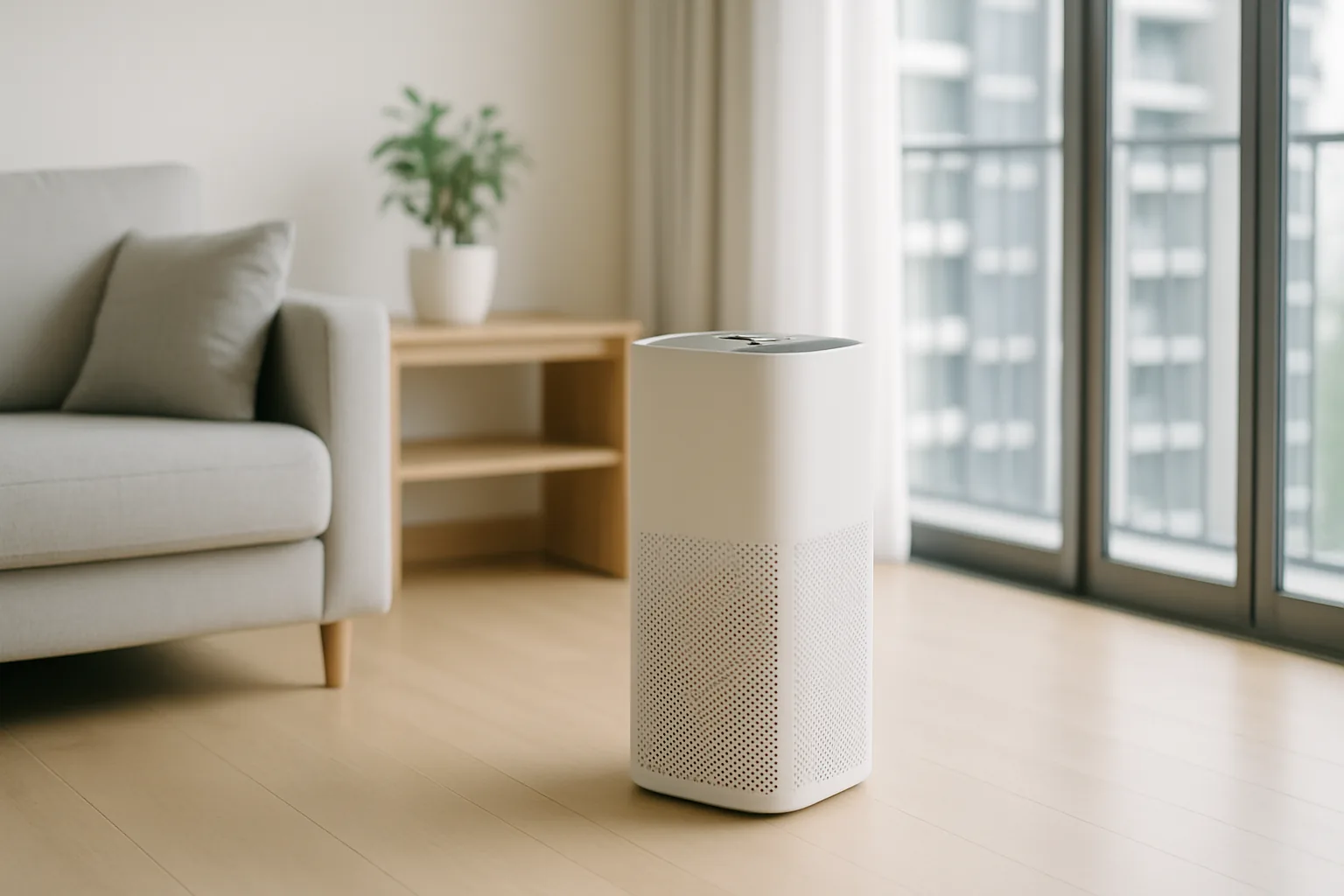
Searching for an air purifier small enough for a compact HDB bedroom, study nook or nursery? A small air purifier is often the smartest buy for Singapore homes, where those tight rooms rarely need a bulky tower unit. Small purifiers cost less, sip electricity, and slot neatly onto a bedside table or desk while still trapping the PM2.5, dust and cooking odours that plague our humid, haze-prone city. This guide rounds up the best small air purifiers you can actually buy and service in Singapore, matched to real flat and condo layouts.
We chose models that punch above their footprint — genuine HEPA filtration, quiet sleep modes, and filters that are easy and affordable to replace here. Whether you’re clearing a single bedroom, a home office or a baby’s room, these picks give you clean air without dominating the space. We weighed CADR relative to size, night-time noise, running cost in SGD and local after-sales support.
What to look for in Singapore
- Match CADR to a single small room — a bedroom or study needs roughly 100–250 m³/h, so you don’t need a large tower’s power.
- Insist on a true HEPA (H13) filter even in a compact unit; it’s what actually captures haze-season PM2.5 and fine dust.
- Check the unit’s footprint against your bedside table or desk — small purifiers should free up floor space, not clutter it.
- Look for an activated-carbon layer to handle Singapore cooking smells and aircon mustiness in enclosed rooms.
- Prioritise a quiet sleep mode (ideally under ~30 dB) since small purifiers usually live right beside where you sleep or work.
- Confirm replacement filters are sold locally at a fair SGD price and are easy to find over the next few years.
- A simple auto mode with an air-quality light saves power and fuss in a small, frequently-used space.
- Choose a brand with proper Singapore warranty and service rather than a no-name grey import.
At a glance
| Model | Best for | Key spec | Indicative price | Rating |
|---|---|---|---|---|
| Xiaomi Smart Air Purifier 4 Compact — value | Overall | HEPA + carbon, app control | $130–$220 | ★★★★★ |
| Philips Series 800/1000 — bedrooms | Quiet sleep | H13 HEPA, auto mode | $200–$350 | ★★★★☆ |
| Coway Airmega compact — reliability | Long filter life | Dual filtration | $300–$500 | ★★★★☆ |
| Novita compact — SG support | Local service | HEPA + carbon | $200–$400 | ★★★★☆ |
| Dyson Purifier (small) — 2-in-1 | Purify + fan | Sealed HEPA + fan | $500–$800 | ★★★★☆ |
The picks
Editor’s Choice
Xiaomi Smart Air Purifier 4 Compact
Xiaomi’s compact purifier is the best small-room value in Singapore — genuine HEPA-plus-carbon filtration, app control and a tiny footprint for well under $250. It’s ideal for an HDB bedroom or study, and the Mi Home app makes automation easy. For most people wanting clean air without the bulk, start here.
Pros
- Excellent value for genuine HEPA
- Small footprint and light
- App control and auto mode
Cons
- Filters via app/online, not every store
- Not powerful enough for large halls
Best for Bedrooms
Philips Series 800/1000
Philips’ entry compact models pair a real H13 HEPA filter with a genuinely quiet sleep mode, making them a favourite for nurseries and bedrooms. Auto mode reacts to air quality so you can leave it running overnight. Local warranty and easy filter availability seal the deal.
Pros
- Very quiet on sleep mode
- True H13 HEPA filtration
- Strong SG warranty and parts
Cons
- Pricier than Xiaomi
- Basic display on lower models
Best Value
Coway Airmega compact
Coway’s smaller Airmega units bring the brand’s reliability and long filter life down to a bedroom-friendly size. They’re a little dearer but reward you with fewer filter swaps and dependable auto performance. A great pick if you want to buy once and forget about it.
Pros
- Long-lasting filters cut running cost
- Reliable dual filtration
- Solid auto mode
Cons
- Costs more upfront
- Slightly larger than the smallest rivals
Best for Local Support
Novita compact
As a homegrown Singapore brand, Novita makes servicing and filter buying painless, which counts for a lot over years of ownership. Its compact purifiers cover HEPA and carbon filtration at fair SGD prices. Choose it if easy local after-sales matters more than app bells and whistles.
Pros
- Homegrown SG brand, easy servicing
- Fair SGD pricing
- Reliable HEPA + carbon
Cons
- App features are basic
- Less brand cachet than Dyson
Premium
Dyson Purifier Cool (compact)
Dyson’s smaller Purifier Cool doubles as a bladeless cooling fan, making it a clever two-in-one for a compact bedroom or study that also gets stuffy in our heat. Sealed HEPA filtration, app and voice control, and that premium design justify the higher price for buyers who want purifying and a cooling breeze from a single small unit. It’s a lifestyle buy as much as an air cleaner.
Pros
- Purifies and cools in one
- Sealed HEPA with app/voice
- Premium looks for small spaces
Cons
- Pricey for a small unit
- Cooling is a breeze, not aircon
The verdict
For a small Singapore room, the Xiaomi Smart Air Purifier 4 Compact delivers the best clean-air-per-dollar; choose Philips for the quietest bedroom performance or Novita for the easiest local servicing.
Frequently asked questions
What size room can a small air purifier cover?
Most small purifiers are rated for roughly 10–25 m², which covers a typical HDB bedroom, study or nursery. Check the model’s stated coverage and CADR, and don’t expect one to clean an open-plan condo living-dining area.
Is a small air purifier enough for an HDB flat?
For individual rooms, yes — a compact unit per bedroom often works better than one big purifier trying to cover the whole flat. If you want whole-home coverage, either buy one per room or add a larger unit for the living area.
Do small air purifiers still use HEPA filters?
The good ones do. Look specifically for a true HEPA (H13) rating rather than vague “HEPA-type” wording, as that’s what captures the fine PM2.5 particles that matter during haze season.
How much electricity does a small air purifier use?
Very little — most compact units draw only a few to a few dozen watts on lower speeds, so running one overnight adds only a small amount to your monthly bill. Auto mode keeps consumption down further.
How often do I change the filter?
Typically every 6–12 months depending on usage and air quality. In dusty or haze-heavy periods you may need to swap sooner; most units have an indicator, and replacements usually cost $30–$90 for compact models.
Related guides
- More Home Cleaning guides
- Best Toshiba Air Purifier in Singapore
- Best Air Purifier Or Dehumidifier in Singapore
Planning a smarter home?
Tell us your space and budget — we’ll point you to the right devices, or connect you with a supplier.

