Reviews are independent. Prices are indicative (SGD) and change often — always check the latest price before buying. We may earn a commission from some links.
Deciding between an air purifier or dehumidifier is a classic Singapore dilemma, because our climate throws two very different problems at homes — haze and dust in the air, and relentless humidity that breeds mould and musty smells. The two appliances do genuinely different jobs, and buying the wrong one leaves your actual problem unsolved. This guide explains which you need, when to own both, and the best locally supported models for each.
We frame this around what Singapore homes actually suffer from and pair the best air purifier picks with the best dehumidifier picks, all sold with local warranty. Whether you are fighting haze-season PM2.5, damp-driven mould in a bedroom or bathroom, or want the best air purifier in Singapore alongside a dehumidifier, these recommendations weigh performance, room size, running cost and SGD value.
What to look for in Singapore
- Diagnose the problem first — an air purifier removes particles (haze, dust, PM2.5), while a dehumidifier removes moisture (mould, musty smells, damp laundry); they do not substitute for each other.
- For air purifiers, insist on a true HEPA filter to capture haze and fine dust, and match the CADR to your room size.
- For dehumidifiers, match litres-per-day capacity to the space — a bedroom needs less than a whole open-plan condo area.
- In humid Singapore, many homes benefit from both, especially if you have damp-prone rooms and haze concerns.
- Check running cost and energy efficiency, as a dehumidifier that runs for hours daily adds up on the bill.
- Auto modes with sensors (air quality for purifiers, humidity for dehumidifiers) save power by running only when needed.
- Quiet operation and a sleep mode matter for overnight bedroom use of either appliance.
- Favour locally supported brands (Philips, Coway, Panasonic for purifiers; Novita, Sterra, LG, EuroPace for dehumidifiers) and compare SGD value including filter or maintenance costs.
At a glance
| Model | Best for | Key spec | Indicative price | Rating |
|---|---|---|---|---|
| Philips HEPA air purifier | Haze + dust | True HEPA, auto air sensor | $300–$600 | ★★★★½ |
| Coway Storm/Airmega purifier | Large-room air | High-CADR HEPA | $400–$900 | ★★★★½ |
| Novita dehumidifier | Damp + mould | Auto humidity, continuous drain | $300–$600 | ★★★★½ |
| LG inverter dehumidifier | Whole-home moisture | High capacity, efficient | $400–$800 | ★★★★½ |
| 2-in-1 purifier + dehumidifier | Small flats, one box | Combined functions | $400–$800 | ★★★★ |
The picks
Best for X
Philips HEPA Air Purifier
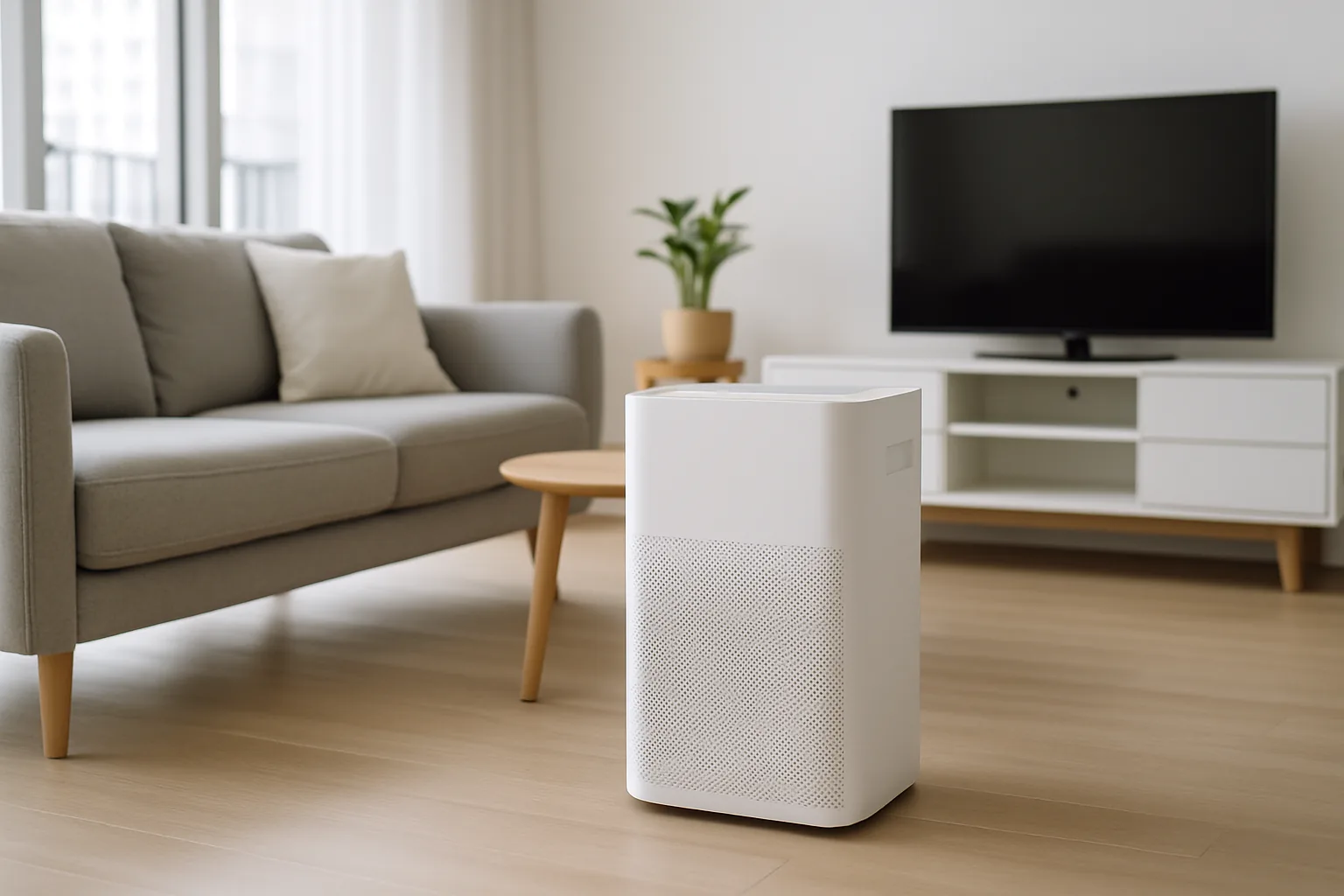
If your problem is haze, dust or PM2.5, a Philips HEPA purifier is our top all-round pick — true HEPA filtration, a clear air-quality readout and reliable auto mode, all well supported locally. It clears bedrooms and living rooms of airborne particles. Buy this if the air, not the damp, is your issue.
Pros
- True HEPA for haze and dust
- Clear air-quality display
- Wide local support and filters
Cons
- Does nothing for humidity
- Genuine filters add ongoing cost
Best for X
Novita Dehumidifier
If your problem is mould, musty smells or damp laundry, a Novita dehumidifier is the answer — auto humidity control, continuous drainage and a locally familiar brand. It keeps bedrooms, wardrobes and bathrooms dry in our climate. Buy this if the damp, not the dust, is your issue.
Pros
- Effective moisture removal
- Auto humidity control
- Locally supported and serviced
Cons
- Does not filter air particles
- Runs up power over long use
Editor’s Choice
Coway Storm / Airmega Purifier
For a large condo living area, Coway’s high-CADR purifiers clear big spaces fast and are highly rated for haze. When air quality across an open-plan home is the priority, this is the standout purifier. Pair it with a dehumidifier if you also battle damp.
Pros
- High coverage for large rooms
- Excellent haze performance
- Well supported locally
Cons
- Premium pricing
- Purifier only, no dehumidifying
Best Value
2-in-1 Purifier + Dehumidifier
For a small flat where space and budget are tight, a combined purifier-dehumidifier tackles both particles and moisture in one box. It is a convenient compromise rather than a specialist at either job. A pragmatic pick if you cannot fit or afford two separate machines.
Pros
- Handles both air and damp
- Saves space and one purchase
- Convenient for small flats
Cons
- Less effective than dedicated units
- Filter and maintenance costs combined
The verdict
Air purifiers and dehumidifiers solve different problems, so diagnose yours first — a Philips or Coway HEPA purifier for haze and dust, a Novita or LG dehumidifier for damp and mould; many Singapore homes are best served by owning both, or a 2-in-1 when space is tight.
Frequently asked questions
Do I need an air purifier or a dehumidifier in Singapore?
It depends on your problem. An air purifier removes airborne particles like haze, dust and PM2.5, while a dehumidifier removes moisture that causes mould and musty smells. If you suffer from both — which many humid Singapore homes do — you may want one of each, as they do not replace one another.
Can one machine do both jobs?
Yes, 2-in-1 purifier-dehumidifiers exist and suit small flats short on space, but they are a compromise — usually less effective at each task than a dedicated purifier or dehumidifier. If a specific problem is severe, a specialist unit will perform better.
Which is better for mould and musty smells?
A dehumidifier — mould and musty odours are moisture problems, so lowering humidity is the fix. An air purifier will not stop mould, though a HEPA model can help clear mould spores already in the air. For damp bedrooms, wardrobes and bathrooms, choose a dehumidifier.
Which helps during the haze?
An air purifier with a true HEPA filter — it captures the fine PM2.5 particles that make haze harmful. A dehumidifier does nothing for haze. During haze season, run a correctly sized HEPA purifier on auto so it ramps up as air quality drops.
Is it worth running both at once?
In a humid, haze-prone climate, yes for many homes — the purifier keeps the air clean while the dehumidifier keeps humidity in check, and together they make a room noticeably more comfortable. Use auto modes and size each to the room to keep running costs sensible.
Related guides
- More Home Cleaning guides
- Best Toshiba Air Purifier in Singapore
- Best Panasonic Air Purifier in Singapore
Planning a smarter home?
Tell us your space and budget — we’ll point you to the right devices, or connect you with a supplier.