Reviews are independent. Prices are indicative (SGD) and change often — always check the latest price before buying. We may earn a commission from some links.
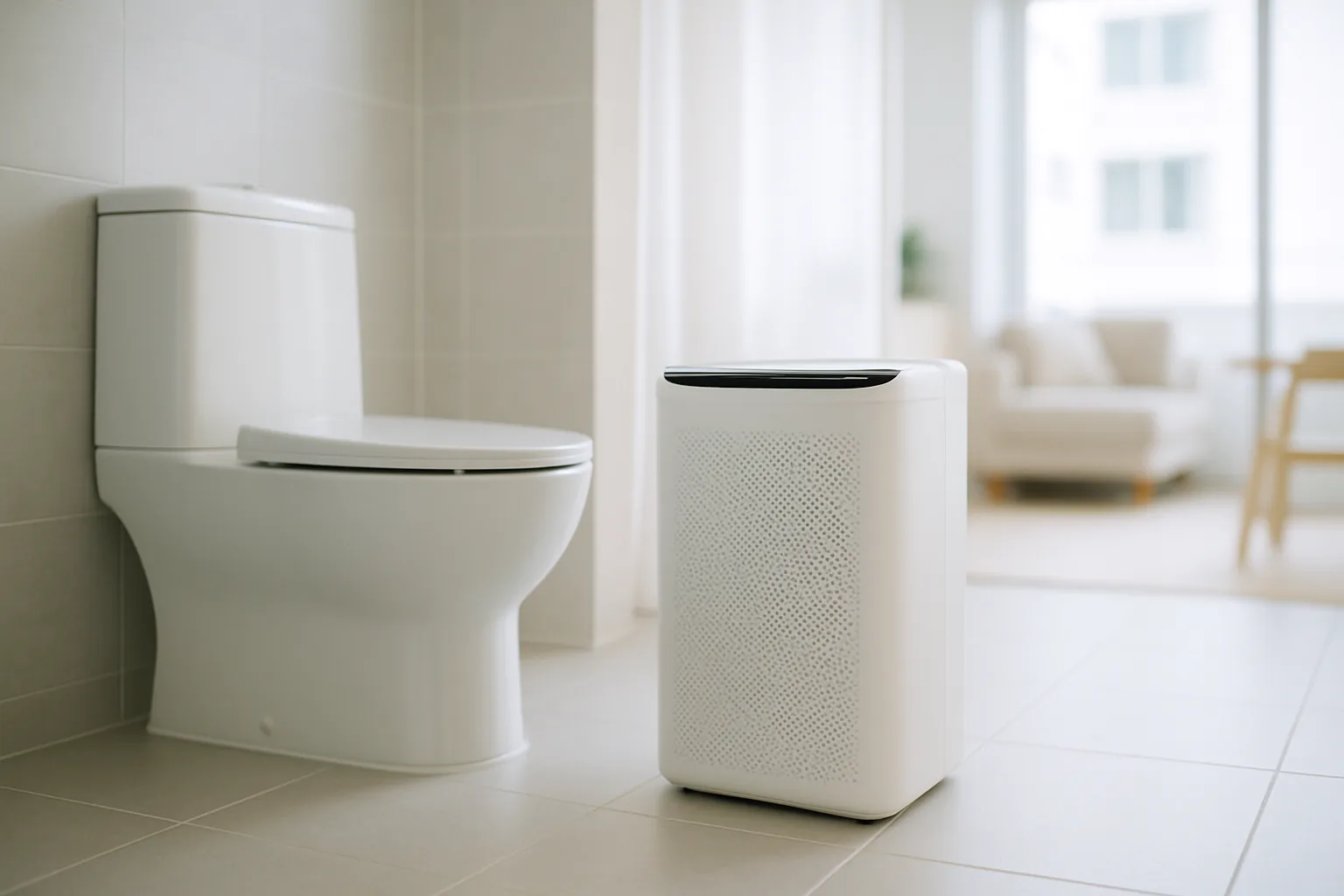
A toilet dehumidifier tackles one of the most stubborn damp spots in any Singapore home — the bathroom, where poor ventilation, constant moisture and our tropical humidity breed mould, musty smells and mildew on grout and ceilings. Because HDB and condo bathrooms are often small and windowless, a compact dehumidifier (or a moisture absorber for very small spaces) keeps the room drier between showers. This guide covers the best options for keeping toilets and bathrooms mould-free.
We picked solutions sold and supported in Singapore, from small electric dehumidifiers to renewable moisture absorbers, matched to bathroom-sized spaces. Whether you want a plug-in dehumidifier for a windowless HDB toilet, a quiet unit for a condo ensuite, or the best dehumidifier in Singapore for damp corners, these choices weigh moisture removal, footprint, running cost and SGD value, with honest notes on what suits a small wet room. We also explain when a plug-in dehumidifier is overkill and a cheap renewable absorber will do, and when persistent mould means you should pair the unit with a better exhaust fan to fix the root cause rather than just the symptom.
What to look for in Singapore
- Bathroom size decides the type — a tiny windowless HDB toilet may only need a compact absorber, while a larger ensuite benefits from a small electric dehumidifier.
- Moisture removal rate (litres per day) should match the space; you do not need a big living-room unit for a small wet room.
- Splash and humidity resistance matter near a shower — keep electric units away from direct water and on a dry shelf or outside the wet zone.
- A compact footprint is essential in small bathrooms; look for slim or wall-friendly designs.
- Auto humidity control and continuous drainage save you emptying the tank in a room you visit often.
- Quiet operation is welcome if the toilet adjoins a bedroom in a condo.
- Renewable moisture absorbers (rechargeable desiccant) are a low-cost, no-power option for very small or hard-to-wire toilets.
- Factor running cost and local warranty; brands like Novita, Sterra, EuroPace and LG are well supported here.
At a glance
| Model | Best for | Key spec | Indicative price | Rating |
|---|---|---|---|---|
| Novita compact dehumidifier | Overall | Auto humidity, compact footprint | $250–$450 | ★★★★½ |
| Sterra dehumidifier | Quiet condo ensuite | Low-noise, auto control | $200–$400 | ★★★★ |
| EuroPace small dehumidifier | Best value | Simple controls, continuous drain | $150–$300 | ★★★★ |
| Rechargeable desiccant absorber | Tiny windowless toilet | No power, renewable, silent | $20–$60 | ★★★★ |
| LG inverter dehumidifier | Larger bathrooms | Higher capacity, efficient | $400–$700 | ★★★★½ |
The picks
Editor’s Choice
Novita Compact Dehumidifier
Novita is a familiar local brand and its compact dehumidifiers are a great fit for keeping a bathroom or adjoining area dry, with auto humidity control and a small footprint. Place it just outside the wet zone to pull moisture from the room. The best all-round pick for damp Singapore toilets.
Pros
- Locally supported and easy to service
- Auto humidity control
- Compact for tight spaces
Cons
- Keep away from direct splashes
- Tank needs emptying without a drain hose
Best Value
EuroPace Small Dehumidifier
The EuroPace small dehumidifier covers the basics affordably — steady moisture removal with simple controls and a continuous-drain option so you can run it hands-off. A sensible budget choice for a damp HDB bathroom or store. Good value for keeping mould at bay.
Pros
- Affordable entry price
- Continuous drain option
- Simple to operate
Cons
- Fewer smart features
- Basic build quality
Best for X
Rechargeable Desiccant Absorber
For a tiny, windowless HDB toilet where wiring a dehumidifier is awkward, a rechargeable desiccant absorber is a silent, no-power fix — it soaks up moisture, then you plug it in to dry out and reuse. Cheap and cordless. Ideal as a supplement in the smallest wet rooms.
Pros
- No power needed in use
- Silent and cordless
- Very low cost, reusable
Cons
- Limited capacity for big rooms
- Needs periodic recharging to dry out
Best for X
LG Inverter Dehumidifier
If your bathroom is larger or opens onto a damp laundry area, an LG inverter dehumidifier offers higher capacity and efficient running. It clears moisture faster and can double up for nearby rooms. A stronger choice when a compact unit is not enough.
Pros
- Higher moisture-removal capacity
- Energy-efficient inverter
- Doubles for adjoining rooms
Cons
- Bigger footprint
- Higher price than compacts
The verdict
For most Singapore bathrooms a compact Novita dehumidifier placed just outside the wet zone is the best all-round fix for damp and mould; for a tiny windowless toilet, a cheap rechargeable desiccant absorber is a silent, no-power supplement worth adding.
Frequently asked questions
Do I really need a dehumidifier for my toilet in Singapore?
If your bathroom is windowless or poorly ventilated and you battle mould, musty smells or mildew on grout, a dehumidifier or moisture absorber genuinely helps by keeping the air drier between showers. In a well-ventilated bathroom with a good exhaust fan, you may only need a small absorber.
Can I put an electric dehumidifier inside a wet bathroom?
Keep any electric unit out of the direct wet zone and away from splashes — place it on a dry shelf or just outside the shower area and run it between uses. For the wettest, smallest toilets, a no-power desiccant absorber is safer to leave in the room.
Dehumidifier or exhaust fan for bathroom mould?
They work best together — a good exhaust fan removes steam during and after showers, while a dehumidifier lowers ambient humidity the rest of the time. If mould persists despite a working fan, adding a compact dehumidifier or absorber usually solves it.
How much does it cost to run a bathroom dehumidifier?
Compact units are relatively cheap to run since you only need them intermittently, not around the clock. Inverter models are more efficient for longer use. A desiccant absorber costs almost nothing since it uses no power in operation, only when recharging.
Which brands are best supported in Singapore?
Novita, Sterra, EuroPace and LG are all well supported locally with warranty and servicing. Buying a locally supported brand makes repairs and replacement parts far easier than an unbranded import.
Related guides
- More Home Cleaning guides
- Best Compact Dehumidifier in Singapore
- Best Lifepro Dehumidifier in Singapore
Planning a smarter home?
Tell us your space and budget — we’ll point you to the right devices, or connect you with a supplier.

