Reviews are independent. Prices are indicative (SGD) and change often — always check the latest price before buying. We may earn a commission from some links.
Smart air purifiers take the guesswork out of clean air in Singapore by sensing the room’s air quality and adjusting themselves, then reporting live readings to an app on your phone so you always know what you are breathing. That matters here, where haze can roll in without warning and everyday cooking, dust and humidity keep indoor air far from pristine, so a purifier that ramps up on its own and lets you check the PSI-driven response from the office is genuinely useful. This guide covers the smart air purifiers worth buying here, the features that count, and which models give the best SGD value.
We wrote this for Singapore homeowners who want a connected purifier they can monitor and control remotely, not just a dumb fan with a filter. Our picks are judged on true HEPA and carbon filtration, sensor accuracy and auto mode, app reliability and smart-home compatibility with Google Home, Apple Home and Alexa, filter cost in SGD, and coverage for HDB versus larger condo rooms. We favour proven brands with SG support over cheap purifiers with flaky apps and vague filtration claims.
What to look for in Singapore
- Match the purifier’s CADR and rated coverage to your room — a bedroom unit will be overwhelmed in an open-plan condo living area.
- Insist on a true HEPA filter plus activated carbon, so it captures both haze particles and everyday cooking and pet odours.
- Check the built-in air-quality sensor and auto mode, which let the purifier ramp up on its own when the haze or dust spikes.
- Look for a stable app with live PM2.5 readings and remote control, so you can start it before you get home during a hazy day.
- Confirm smart-home compatibility with Google Home, Apple Home or Alexa if you want voice control and automated routines.
- Factor in the running cost of genuine filters in SGD and how often they need changing in our dusty, humid conditions.
- Consider noise on the sleep setting if the purifier will run in a bedroom overnight.
- Buy through authorised SG channels for local warranty, genuine filters and trustworthy firmware updates.
At a glance
| Model | Best for | Key spec | Indicative price | Rating |
|---|---|---|---|---|
| Xiaomi Smart Air Purifier 4 series — Editor’s Choice | Best value smart purifier | True HEPA, sensor, app | $150–$350 | ★★★★★ |
| Coway (Airmega) smart series — Premium | Quiet, high-quality filtration | Multi-stage HEPA, auto mode | $400–$900 | ★★★★☆ |
| Philips Wi-Fi purifier series — Best all-rounder | Reliable auto cleaning | HEPA + carbon, app | $300–$700 | ★★★★☆ |
| Dyson Purifier (Cool) — Best 2-in-1 | Purifier plus cooling fan | Sealed HEPA + carbon, app | $600–$900 | ★★★★☆ |
The picks
Editor’s Choice
Xiaomi Smart Air Purifier 4 series
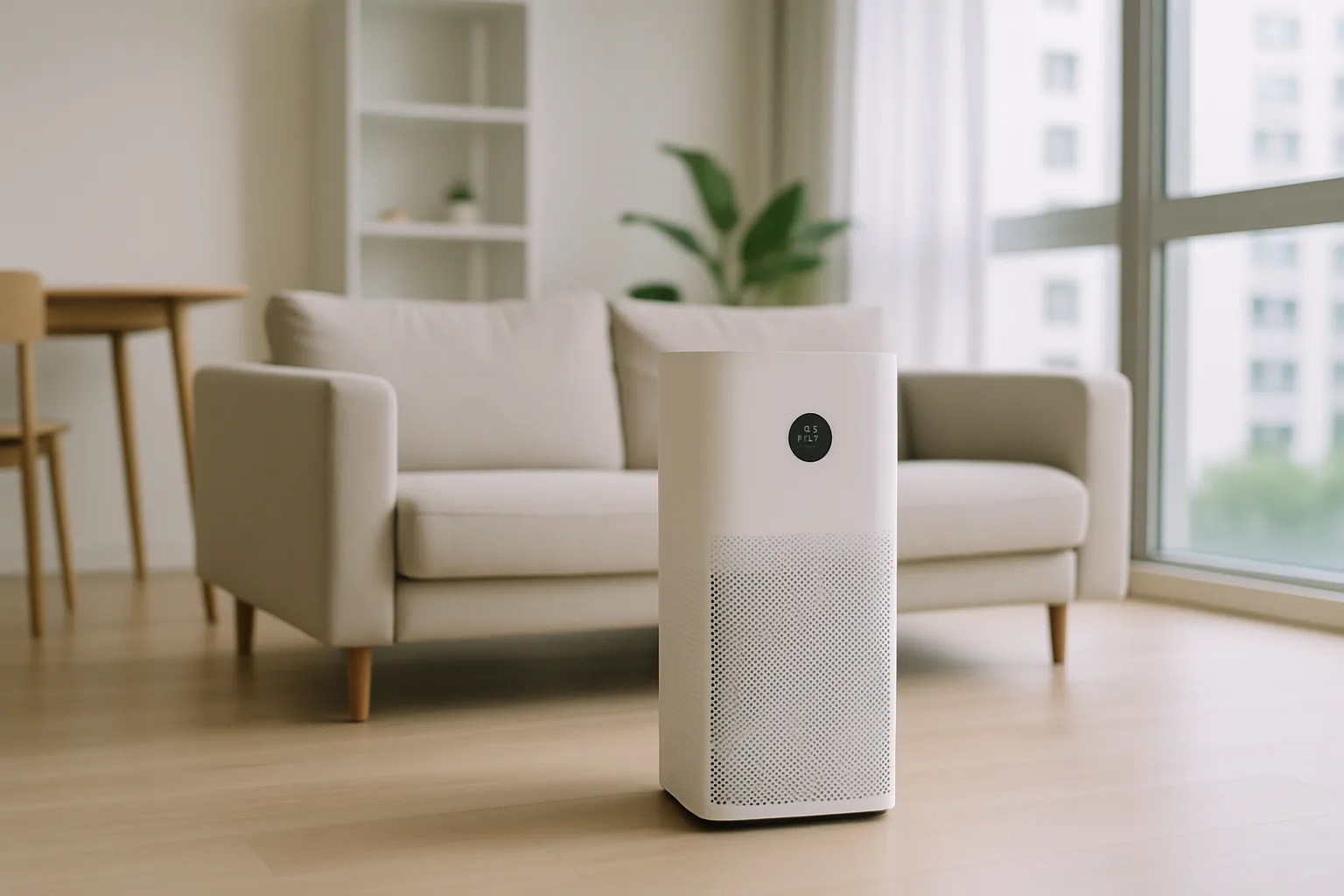
The Xiaomi Smart Air Purifier 4 range is our value pick for smart air purifiers in Singapore, packing a true HEPA filter, an accurate PM2.5 sensor and full Mi Home app control with auto mode into a very fair price. You can watch live readings and start it remotely before a hazy commute home. Best all-round smart purifier for most HDB and condo rooms.
Pros
- True HEPA with a real sensor
- Excellent app with live readings
- Great value and auto mode
Cons
- Filters best bought in-ecosystem
- Larger models needed for big halls
Premium
Coway (Airmega) smart series
Coway’s smart purifiers pair excellent multi-stage HEPA filtration with famously quiet operation and a reliable auto mode, making them a premium choice for bedrooms and living halls alike. Build quality and filtration are a clear step up. Best for buyers who want top-tier clean air with app monitoring.
Pros
- Excellent multi-stage filtration
- Very quiet operation
- Solid app and auto mode
Cons
- Premium price
- Filters are a premium too
Best all-rounder
Philips Wi-Fi purifier series
Philips’ Wi-Fi purifiers offer dependable HEPA-and-carbon filtration with a clear app, live air-quality display and a sensible auto mode, backed by easy local filter availability. They are a fuss-free, trustworthy middle ground. Best all-rounder for those who want a reliable, well-supported smart purifier.
Pros
- Reliable HEPA plus carbon
- Clear app and auto mode
- Easy-to-source SG filters
Cons
- Pricier than Xiaomi
- Design is functional
Best 2-in-1
Dyson Purifier (Cool)
The Dyson Purifier Cool doubles as a cooling fan, cleaning the air through a sealed HEPA and carbon filter while pushing a breeze, all controlled and monitored from a polished app. It suits Singapore’s heat as a two-in-one. Best for those who want purification and cooling in one smart device.
Pros
- Purifies and cools in one
- Sealed HEPA plus carbon
- Excellent app and auto sensing
Cons
- Premium price
- Genuine filters are a recurring cost
The verdict
For most Singapore homes the Xiaomi Smart Air Purifier 4 series is the best value smart air purifier thanks to true HEPA, an accurate sensor and a great app; step up to Coway for premium quiet filtration or the Dyson Purifier Cool if you want cooling built in.
Frequently asked questions
What makes an air purifier smart, and is it worth it?
A smart purifier adds a built-in air-quality sensor, an auto mode that adjusts itself, and app control with live readings so you can monitor and start it remotely. In haze-prone Singapore, that automation and visibility are genuinely worth it. You get cleaner air with less fiddling, and you can react to a bad-air day from anywhere.
Are smart air purifiers good for haze in Singapore?
Yes — as long as they have a true HEPA filter, they capture the fine PM2.5 particles that make haze harmful, and their sensors ramp the fan up automatically as the air worsens. Keep windows shut during high PSI days. The app lets you check the response and start the unit before you even get home.
Do smart air purifiers work with Google Home or Apple Home?
Many do — Xiaomi, Philips and Dyson offer app control and often Google Home or Alexa support, with some models adding Apple Home. Confirm the specific model before buying if voice control matters. Once linked, you can start the purifier or check air quality by voice or as part of a routine.
How much do replacement filters cost for a smart purifier?
Genuine filters typically need changing every six to twelve months in Singapore’s dusty, humid climate, and haze season shortens that. The app usually tracks filter life and reminds you. Budget for replacements in SGD as part of the ownership cost, and always buy genuine filters to keep filtration effective.
Related guides
- More Home Cleaning guides
- Best Dyson Air Purifier Fan in Singapore
- Best Honeywell Air Purifier in Singapore
Planning a smarter home?
Tell us your space and budget — we’ll point you to the right devices, or connect you with a supplier.

