Reviews are independent. Prices are indicative (SGD) and change often — always check the latest price before buying. We may earn a commission from some links.
Dyson’s move into wet-and-dry floor cleaning with the WashG1 marked a real shift for Singapore homes. Our flats are almost entirely hard-floored with tile, vinyl, or laminate, and the daily reality is not just dust but sticky spills, footprints, and the general grime that a dry vacuum alone cannot lift. A machine that vacuums debris and washes the floor in a single pass, then cleans its own rollers, is genuinely suited to the way we live here, where mopping by hand in the heat is nobody’s idea of fun.
That said, wet-and-dry floor washers are a newer category and it pays to understand what they do well and where a traditional cordless vacuum still makes more sense. They excel at hard-floor washing but are not meant for carpets, stairs, or overhead work. In this guide we look at the Dyson WashG1 and how it fits a local home, alongside the wider question of when a wet-dry washer beats a normal vacuum. We frame everything for Singapore: tiled floors, humid drying conditions, self-cleaning convenience, and the honest trade-offs so you buy the right tool for your home.
What to look for in Singapore
- A wet-dry washer suits our mostly hard tiled and vinyl floors but is not meant for carpets or rugs.
- Look for separate clean and dirty water tanks so you are never spreading dirty water back onto the floor.
- Self-cleaning rollers that rinse at the dock save you the grim job of hand-washing a filthy mop head.
- Edge-cleaning capability matters in HDB flats with skirting and tight corners along the walls.
- Runtime should cover your whole hard-floor area in one pass, so larger flats need a bigger battery.
- Easy tank emptying and quick drying of components prevent musty smells in our humid climate.
- Consider weight and manoeuvrability, since a heavy washer is tiring to push around a big flat.
- A dry-vacuum mode or pre-sweep option helps with loose debris before the wet wash begins.
At a glance
| Model | Best for | Key spec | Indicative price | Rating |
|---|---|---|---|---|
| Dyson WashG1 — Overall wet-dry | Hard-floor washing | Wash and pick-up, self-clean | $800-$1,000 | ★★★★½ |
| Dyson Cordless Stick (dry) — Companion | Dust and overhead | Strong dry suction, handheld | $700-$1,200 | ★★★★★ |
| Dreame Wet-Dry Washer — Value | Budget wet cleaning | Wash and vacuum, self-clean | $400-$700 | ★★★★½ |
| Roborock Wet-Dry Washer — Alternative | Hard floors | Edge clean, self-wash dock | $500-$800 | ★★★★½ |
| Karcher Wet & Dry Vacuum — Messes | Spills and car porch | Handles wet and dry debris | $250-$450 | ★★★★ |
The picks
Editor’s Choice
Dyson WashG1
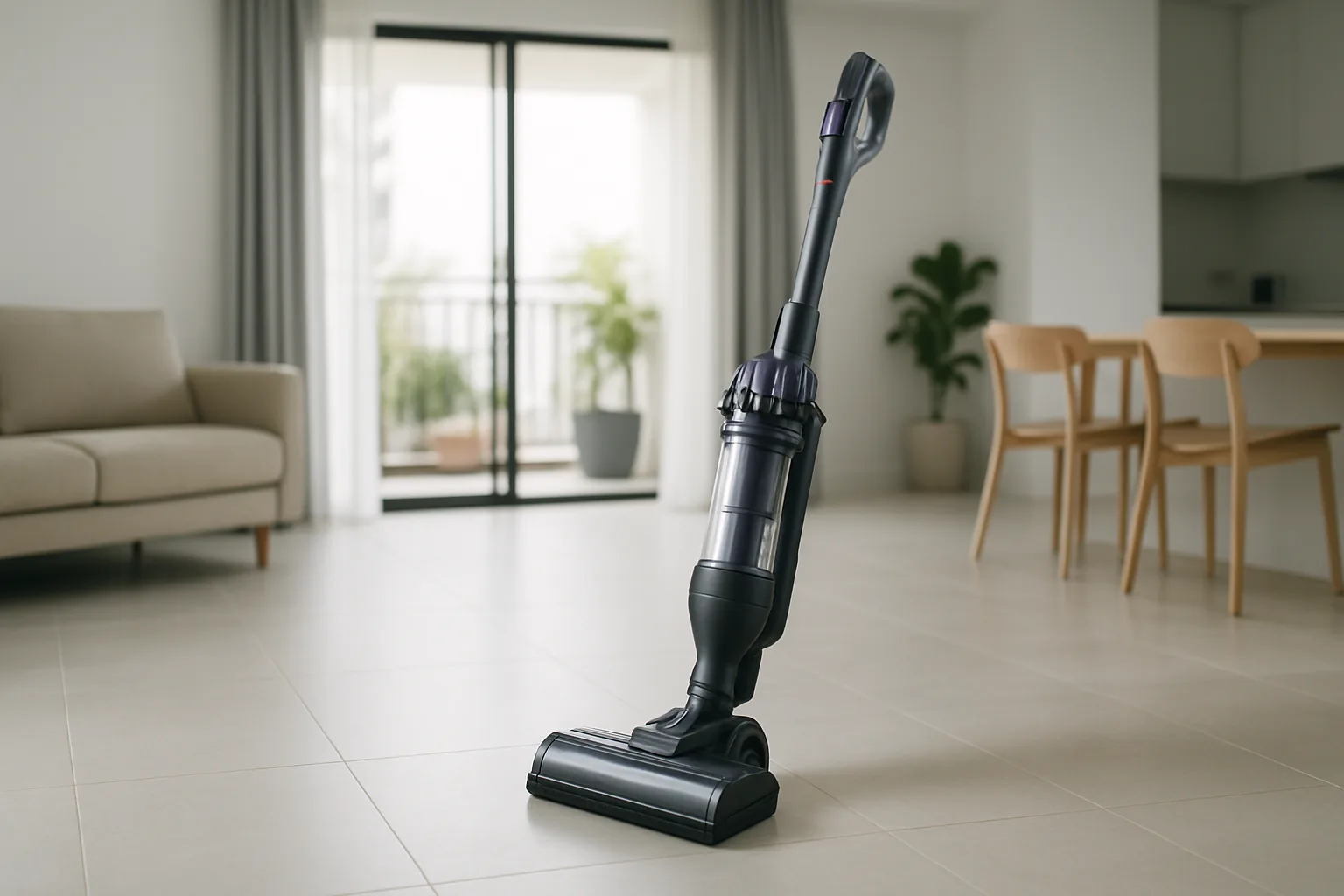
The WashG1 is Dyson’s dedicated hard-floor washer, and it suits Singapore homes well by vacuuming debris and washing tiled floors in one pass. Separate clean and dirty water tanks mean you are laying down fresh water, not smearing grime, and the rollers rinse themselves at the dock so you avoid the worst part of mopping. It leaves floors genuinely clean and quick-drying. It is a specialist tool rather than an all-rounder, but for keeping large tiled areas fresh it is excellent.
Pros
- Washes and picks up in one pass
- Separate clean and dirty tanks
- Self-cleaning rollers
Cons
- Hard floors only, not carpet
- Premium price
Premium
Dyson Cordless Stick (dry)
A wet-dry washer does not replace a good dry vacuum, and Dyson’s cordless stick remains the ideal companion for the jobs the WashG1 cannot do. It handles dust, ceiling fans, sofas, mattresses, and the car, converting to a handheld for the awkward spots. Owning both gives you a complete cleaning kit: dry-vacuum first, then wash. For many households the stick is still the more essential of the two, and the pairing covers everything.
Pros
- Class-leading dry suction
- Converts to handheld
- Handles overhead and furniture
Cons
- Separate purchase from the washer
- Premium price
Best Value
Dreame Wet-Dry Washer
Dreame offers a capable wet-and-dry floor washer for noticeably less than the Dyson, making the category accessible to more households. It vacuums and washes hard floors in one pass, has self-cleaning at the dock, and leaves tiles fresh. The build and refinement trail the Dyson slightly, but the core job is done well and the value is strong. For buyers who want single-pass floor washing without the flagship price, it is the smart-value alternative.
Pros
- Wash and vacuum for less
- Self-cleaning dock
- Good value
Cons
- Less refined than Dyson
- Edge cleaning could be sharper
Best for X
Karcher Wet & Dry Vacuum
For a different kind of wet mess, a Karcher wet-and-dry drum vacuum tackles the jobs a floor washer cannot: a burst bag of liquid, water pooling in the kitchen, or the grit and puddles of a car porch. It is not a floor-polishing washer but a robust mess-clearer. For landed homes and larger households that face varied wet messes, it complements a floor washer rather than competing with it, and it is far cheaper.
Pros
- Handles bulk wet messes
- Tough, reliable build
- Affordable
Cons
- Not a floor-washing polisher
- Bulkier to store
The verdict
The Dyson WashG1 is an excellent hard-floor washer that suits Singapore’s tiled homes, but it works best paired with a dry cordless vacuum rather than replacing one. If budget is tight, Dreame’s wet-dry washer covers the same job for meaningfully less.
Frequently asked questions
Does the Dyson WashG1 replace a normal vacuum?
Not entirely. The WashG1 is a hard-floor washer that vacuums debris and washes in one pass, but it is not designed for carpets, stairs, sofas, mattresses, or overhead cleaning. Most households pair it with a dry cordless vacuum for those jobs. Think of it as a mopping replacement that also picks up loose debris, rather than a total do-everything machine.
Is a wet-dry floor washer good for Singapore’s tiled floors?
Yes, it suits our homes very well because Singapore flats are mostly hard-floored with tile, vinyl, or laminate, which is exactly what these washers are built for. They lift footprints, spills, and grime that a dry vacuum leaves behind, and the floor dries quickly. Just avoid using them on any rugs or carpet, which need a dry vacuum instead.
How do I stop it smelling musty in our humid weather?
Empty and rinse the dirty-water tank after every use, and let the tanks and rollers dry out rather than sealing them away damp. Most models run a self-clean cycle at the dock that helps, but occasional deeper cleaning of the roller and tank keeps odours away. Good drying is the key to a fresh-smelling machine in our humidity.
Is the WashG1 worth it over a cheaper wet-dry washer?
The Dyson is more refined, with strong build quality, effective self-cleaning, and good single-pass results, which justifies its price for many. However, brands like Dreame and Roborock offer capable wet-dry washers for less, and the performance gap is not huge for everyday floor washing. If budget matters more than the Dyson name and finish, the alternatives are very reasonable.
Can I use a wet-dry washer on the whole flat in one go?
You can if the battery runtime covers your hard-floor area, which is fine for most HDB flats but may need a mid-clean top-up in a large home. Sweep or dry-vacuum loose debris first for the best wash result, then run the washer. Refill the clean-water tank if you are washing a large area so the floor keeps getting fresh water.
Related guides
Planning a smarter home?
Tell us your space and budget — we’ll point you to the right devices, or connect you with a supplier.

