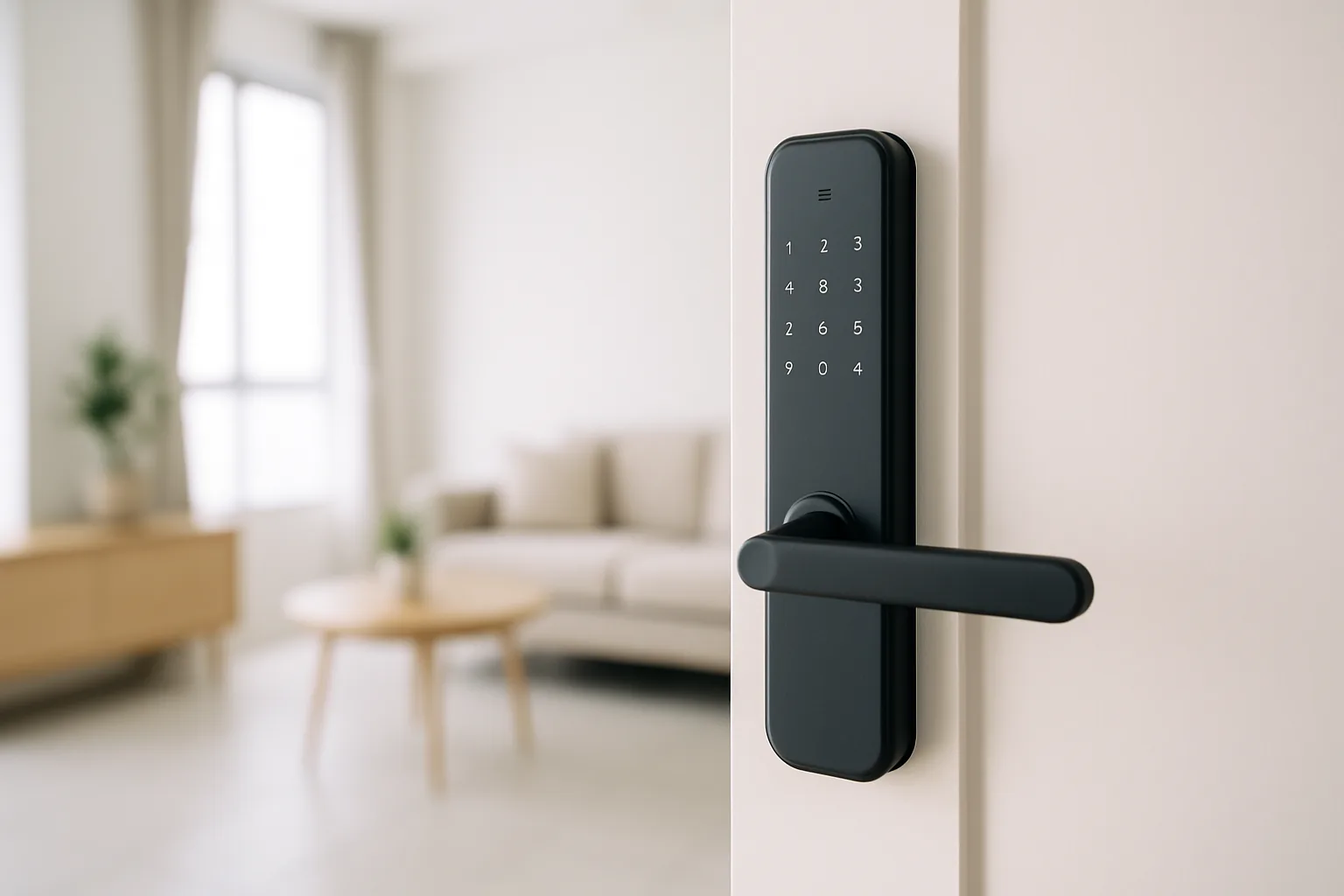
Reviews are independent. Prices are indicative (SGD) and change often — always check the latest price before buying. We may earn a commission from some links.
A truly battery-free smart lock — one that never needs charging or a battery swap — is the holy grail for anyone tired of low-battery beeps, but in reality almost every smart lock on the Singapore market runs on rechargeable or replaceable batteries. What most people searching for a battery-free lock actually want is freedom from ever being caught out: ultra-long battery life, generous low-battery warnings, USB-C emergency power and a mechanical key backup so a flat battery is never a lockout. This guide explains the honest state of battery-free smart locks in Singapore and recommends the models that get closest to a worry-free experience.
We have been straight about the technology: passive, mechanically powered locks exist but are niche and rarely sold with local support here, so for most HDB and condo homes the smart move is a well-supported lock with long life and solid emergency backups. We focused on models with proper Singapore installation, warranty and easy USB-C rescue power, so you effectively never worry about batteries even if the lock is not literally battery-free.
What to look for in Singapore
- Be realistic — genuinely battery-free smart locks are rare in Singapore, so prioritise long battery life plus reliable emergency power rather than chasing a marketing claim.
- Look for USB-C emergency power on the front of the lock, which lets you unlock with a power bank even after the battery is fully drained.
- Check for clear low-battery warnings that give you weeks of notice, so a dead battery is always avoidable.
- Prefer large rechargeable packs or long-life AA setups, and check the quoted months of use for your expected door traffic.
- Ensure there is a mechanical key override as a final backup, and store that spare key safely outside the flat.
- Match the lock body to your door — mortise for solid HDB/condo main doors, slim rim for a thin metal HDB gate.
- Consider power-light usage patterns — mostly-PIN entry drains far less than constant Wi-Fi and fingerprint scanning, extending life dramatically.
- Choose brands with local service (Kaadas, Yale, Philips, igloohome) so batteries, parts and support are easy to get in Singapore.
At a glance
| Model | Best for | Key spec | Indicative price | Rating |
|---|---|---|---|---|
| Kaadas digital lock series | Overall (long life + USB-C) | Rechargeable, USB-C rescue, alerts | $450–$900 | ★★★★★ |
| Philips digital lock series | Efficient long-life design | Big battery, USB-C, auto-lock | $450–$1,000 | ★★★★½ |
| Yale digital lock series | Trusted value | Long AA life, key + USB-C backup | $400–$800 | ★★★★ |
| igloohome smart lock | Low-power offline use | Bluetooth/PIN, long life, USB-C | $350–$650 | ★★★★ |
| Passive/mechanical padlock (niche) | Off-grid gates/stores | No battery, PIN mechanical | $50–$200 | ★★★½ |
The picks
Editor’s Choice
Kaadas Digital Lock Series
Kaadas gets closest to a worry-free, battery-free feel for most Singapore homes — large rechargeable packs deliver many months per charge, clear low-battery alerts give ample warning, and a front USB-C port lets you rescue-power the lock with any power bank. Add reliable fingerprint, PIN and card entry plus wide local service, and you effectively never think about batteries. The pragmatic best choice.
Pros
- Long rechargeable life with clear alerts
- USB-C emergency power on the front
- Wide local installation and service
Cons
- Not literally battery-free
- Flagship models cost more
Premium
Philips Digital Lock Series
Philips locks combine an efficient design with big battery capacity, so intervals between charges are long, and they include USB-C rescue power and dependable auto-lock. On a renovated door they look sharp while quietly avoiding battery anxiety. A strong premium pick if you want long life, a recognisable brand and clean design together.
Pros
- Efficient design, long intervals
- USB-C rescue power and auto-lock
- Premium look with local warranty
Cons
- Flagship models are expensive
- Still requires occasional charging
Best Value
Yale Digital Lock Series
Yale’s AA-powered locks stretch a long way between changes and back it with both a mechanical key and USB-C emergency power, so you are never truly stuck. It is the trusted, widely serviced choice for buyers who just want dependable long life without fuss. Keep a set of spare AAs at home and battery worry effectively disappears.
Pros
- Long AA life, easy to swap
- Key + USB-C backups
- Trusted, widely serviced brand
Cons
- AA batteries to keep on hand
- Base models have basic smart features
Best for X
igloohome Smart Lock
Because igloohome models often lean on low-power Bluetooth and PIN entry rather than constant Wi-Fi, real-world battery life is impressively long, and USB-C rescue power plus offline algoPIN codes keep things convenient. As a Singapore brand with local support, it is a smart pick if you want minimal power draw and easy remote access without a battery-hungry always-on connection.
Pros
- Low-power design, long life
- Offline PIN codes, USB-C rescue
- Singapore brand with local support
Cons
- Fingerprint only on higher models
- Some app unlock is Bluetooth-range only
The verdict
There is no mainstream truly battery-free smart lock in Singapore, so the smart choice is a long-life, well-backed lock — a Kaadas model with USB-C rescue power is the best all-rounder, with igloohome ideal for minimal power draw and Yale for trusted, easily-serviced value.
Frequently asked questions
Is there a truly battery-free smart lock in Singapore?
Genuinely battery-free electronic smart locks are rare and mostly niche — the practical smart locks sold with local support all use rechargeable or replaceable batteries. What you can get is a lock with very long life, clear low-battery warnings, USB-C emergency power and a mechanical key backup, which together mean you effectively never face a lockout from a dead battery.
What happens when a smart lock’s battery runs out?
You get low-battery warnings for weeks beforehand, and most locks include a front USB-C port so you can briefly power the keypad with a power bank and unlock immediately. There is also a mechanical key override as a final backup — store that spare key somewhere safe outside the flat, such as with a trusted neighbour or family member.
How long do smart lock batteries actually last in Singapore?
Typically several months to about a year on a charge or set of batteries, depending on door traffic and features — heavy fingerprint use and always-on Wi-Fi drain faster, while mostly-PIN entry lasts much longer. Our humidity has little effect on battery life itself; the bigger factor is how often and how the lock is used.
Are mechanical PIN locks a good battery-free alternative?
A passive mechanical combination lock never needs power, which suits an off-grid gate, store room or bicycle, but it lacks the fingerprint, app and audit features of a real smart lock. For a main door where you want convenience and remote access, a long-life electronic lock with good backups is the better everyday choice.
Which smart lock needs charging least often?
Low-power designs that rely on Bluetooth and PIN rather than constant Wi-Fi — such as igloohome models — and large-capacity rechargeable locks like Kaadas tend to go longest between top-ups. If minimising charging matters most, favour a lock with a big battery, an efficient design and the option to disable always-on connectivity.
Related guides
- More Smart Home guides
- Best Aqara Smart Lock D200i in Singapore
- Best Igloohome Smart Lock in Singapore
Planning a smarter home?
Tell us your space and budget — we’ll point you to the right devices, or connect you with a supplier.

