Reviews are independent. Prices are indicative (SGD) and change often — always check the latest price before buying. We may earn a commission from some links.
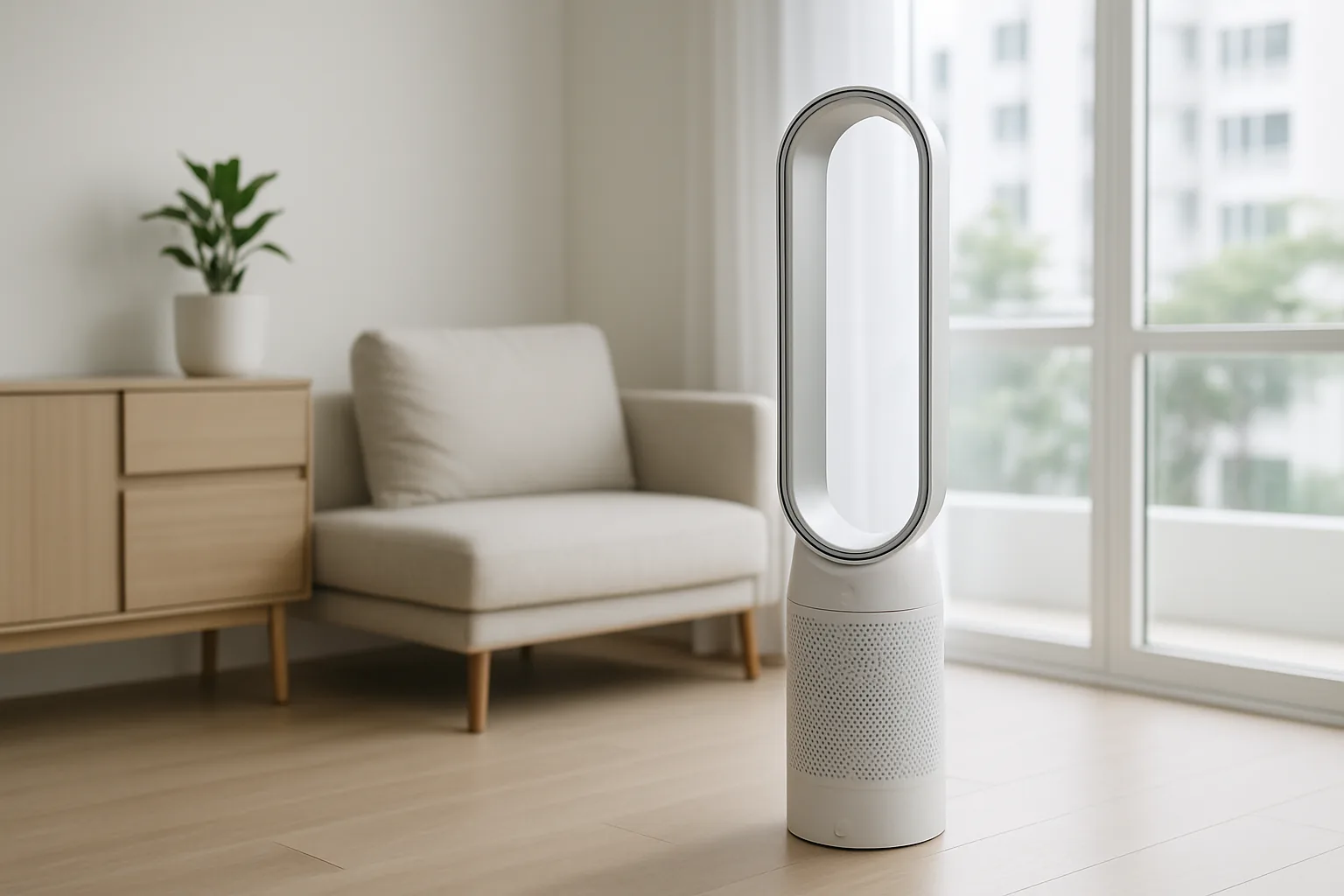
An air purifier fan is a clever two-in-one that makes a lot of sense in Singapore, where we want clean air and a cooling breeze in equal measure. The idea is simple: a single tower both filters the air of fine dust, haze particles and allergens, and blows purified air across the room as a fan, so you get cleaner air and a bit of cooling without running two separate appliances. In compact HDB flats and condos where floor space and power points are precious, combining the two functions into one slim tower is genuinely appealing.
Dyson made this category famous, but there are now several options, and they vary in how well they actually purify versus how well they cool. Filtration quality, the size of room they can clean, noise, and whether they add heating or humidifying all shape which model suits your home. It is also worth being clear-eyed that a purifier fan cools by moving air, not like an aircon, so expectations matter. This guide explains what to look for in an air purifier fan for Singapore conditions, compares the models worth considering, and gives the honest trade-offs so you buy the right two-in-one for your space.
What to look for in Singapore
- Check the purifier uses a genuine HEPA-grade filter, which is essential for trapping the fine particles that haze brings to Singapore.
- Match the rated room-cleaning area to your actual room size, so the purifier can clean the air quickly enough.
- Look for an activated carbon layer to tackle odours and cooking smells common in open-kitchen HDB flats.
- Consider the fan’s airflow and oscillation, since the cooling breeze is half the point of a two-in-one.
- Prefer a model with a real-time air-quality sensor and auto mode so it ramps up during haze and settles when clean.
- Check the noise level on higher settings, as you may run it overnight in a bedroom for both air and breeze.
- Factor in replacement filter cost and availability, since filters need changing periodically in our dusty conditions.
- Decide whether you want extra functions like heating or humidifying, which some premium models add at a price.
At a glance
| Model | Best for | Key spec | Indicative price | Rating |
|---|---|---|---|---|
| Dyson Purifier Cool — Editor’s Choice | Overall | HEPA + carbon, strong airflow | $700–$1000 | ★★★★★ |
| Xiaomi Smart Fan + Purifier — Best Value | Everyday rooms | HEPA, app, decent airflow | $250–$450 | ★★★★☆ |
| Coway Purifier with Fan — Best Filtration | Air quality focus | Strong HEPA, quiet | $400–$700 | ★★★★★ |
| Dyson Purifier Hot+Cool — Best All-Season | Heat + cool | HEPA, heating and cooling | $900–$1300 | ★★★★★ |
| Philips 2-in-1 Purifier Fan — Premium | Balanced pick | HEPA + carbon, sensor | $500–$800 | ★★★★☆ |
The picks
Editor’s Choice
Dyson Purifier Cool
Dyson’s Purifier Cool is the definitive air purifier fan, pairing sealed HEPA and activated carbon filtration with the powerful, far-throwing airflow the brand is known for, so it both cleans the air properly and delivers a genuine cooling breeze across the room. The air-quality sensor and auto mode ramp it up during haze and ease off when the air is clean, and the app reports what it is detecting. It is expensive and filters are not cheap, but as a two-in-one it does both jobs better than anything else. The obvious pick for those who want the best.
Pros
- Excellent HEPA and carbon filtration
- Strong cooling airflow
- Smart sensor and auto mode
Cons
- Expensive
- Replacement filters cost more
Best Value
Xiaomi Smart Fan + Purifier
Xiaomi’s smart two-in-one options bring HEPA filtration and a capable fan together at a fraction of the premium price, with app control and auto modes that cover the essentials well. Airflow and filtration are a step below the top Dysons, but for a bedroom or study the combination of clean air and a breeze is more than adequate. Filter replacements are affordable and easy to find locally. For buyers who want the two-in-one convenience without the premium outlay, it is the sensible value choice.
Pros
- Great value two-in-one
- HEPA filtration and app control
- Affordable filters
Cons
- Airflow below premium models
- Filtration not top-tier
Best for X
Coway Purifier with Fan
If air quality is your main priority and the fan is a bonus, Coway is renowned for excellent, quiet HEPA filtration that clears fine particles and haze effectively. Its purifier-fan models focus on cleaning the air thoroughly and running quietly enough for overnight use, with the airflow providing gentle circulation rather than a strong cooling blast. For allergy sufferers or anyone who cares most about breathing clean air in Singapore’s hazy conditions, the filtration-first approach makes it a standout. The cooling is modest but the air is genuinely clean.
Pros
- Excellent, quiet filtration
- Great for allergies and haze
- Reliable performance
Cons
- Cooling breeze is gentle
- Less airflow than fan-focused models
Premium
Dyson Purifier Hot+Cool
The Hot+Cool adds heating to Dyson’s purifier fan, which sounds odd for Singapore but is handy for over-cooled, aircon-chilled bedrooms and drying out a damp room. You get the same sealed HEPA and carbon filtration and strong airflow, plus the flexibility of warming the air when needed. It is the most expensive option and heating sees limited use in our climate, but as a do-everything premium purifier fan it is impressively versatile. Best for those who want maximum flexibility and are not fussed about the price.
Pros
- Full filtration plus heating and cooling
- Strong airflow
- Very versatile
Cons
- Most expensive option
- Heating rarely needed here
The verdict
The Dyson Purifier Cool is the best air purifier fan overall for combining genuine filtration with real cooling airflow, while Xiaomi offers the value pick and Coway leads on quiet filtration. Just set expectations correctly: it cleans the air and moves a breeze, but it is not a substitute for your aircon.
Frequently asked questions
Does an air purifier fan cool a room like an aircon?
No, an air purifier fan cools by moving air across your skin like a regular fan, which feels refreshing but does not lower the room temperature the way an air conditioner does. It is best thought of as a fan that also cleans the air, not a replacement for aircon. In Singapore many people use one in rooms they do not air-condition, or run it alongside aircon to circulate and purify the air more evenly.
Is the filtration in a two-in-one as good as a dedicated purifier?
The best two-in-one units use genuine HEPA and carbon filtration that rivals dedicated purifiers, but some cheaper fan-first models compromise on filter quality or the room size they can handle. If clean air is your priority, check the filter grade and the rated cleaning area rather than assuming the fan function means weaker filtration. A quality two-in-one from a reputable brand purifies just as effectively while adding the convenience of a fan.
Are air purifier fans good for haze in Singapore?
Yes, provided they use a true HEPA filter, which captures the fine PM2.5 particles that make haze harmful. During haze episodes an auto-mode model with an air-quality sensor will ramp up automatically to clear the air, and the fan circulates the cleaned air around the room. Keep windows closed and run it in the rooms you use most. Just remember to replace the filter on schedule, as haze season works filters harder than usual.
How often do I need to replace the filter?
Filter life depends on the model and air quality, but most HEPA-and-carbon filters last around six to twelve months in typical use, with heavier use during haze shortening that. The unit or app usually indicates when a change is due. Factor the replacement cost into your budget, as premium filters can be pricey, and always use genuine or properly rated filters so the purifier keeps performing. Availability of local replacements is worth checking before you buy.
Can I run an air purifier fan overnight in the bedroom?
Yes, and many people do, since clean air and a gentle breeze both aid sleep. Look for a model with a quiet or night mode and a low noise level on its lower settings, as higher fan speeds can be audible. An auto mode is helpful overnight because it keeps the air clean without you needing to adjust it. A quieter, filtration-focused model is often the better bedroom choice than a fan-first unit that prioritises strong airflow.
Related guides
Planning a smarter home?
Tell us your space and budget — we’ll point you to the right devices, or connect you with a supplier.

